Opening Credits to “Se7en” (1995) dir. David Fincher, scr. Andrew Kevin Walker

Video

This legendary and infamous opening credit sequence to director David Fincher’s classic serial murder thriller “Se7en” may not seem particularly innovative in 2003. But in the fall of 1995, this completely blew we away (and I must say, still does to this day). This credit sequence told you all you needed to know about how different this film would be from all other detective / serial killer films before it.

“Se7en” is one of the most influential pieces of pop culture in the past twenty years. However, most of its impact has arguably been on TV. Without it, we would never have had shows like “CSI” and “Dexter,” or even “24” and “House.”  I distinctly remember seeing this credit sequence on a huge screen with booming digital sound that was so bass heavy I felt it in my bowels.

Extremely creeping and unnerving. Probably not safe for work. Major credit should be given to Harris Savides, who shot the sequence, and Angus Wall who edited it.  The music is remix of Nine Inch Nails’ classic “Closer” by the band Coil.

“I Can’t Live Without My Radio” – LL Cool J

Video

The rap version of the Dead Boys’ “Sonic Reducer.” This is a song about someone whose self-worth is based on how loud he can play his music. It may be annoying, but it’s just someone who needs to show the world they matter. It may be misguided, but it’s sincere. Fortunately, this song (like “Sonic Reducer”) is awesome to crank in any way you see fit. From the classic 1985 album “Radio.”

“Sonic Reducer” – Dead Boys (live from CBGB’s 1977)

Video

http://www.youtube.com/watch?v=W1Tb3DT-mjA

The signature song from the premiere Cleveland bad boys of punk. This is a ferocious performance captured live at NYC’s legendary punk club CBGB’s in 1977. I’m not quite sure what this song is about, but I’ve always thought it was about someone who felt small in their life who felt bigger by blasting music from their car, their home, etc. as a way to show they’re significant and that they mean something. I try to remember this every time I get annoyed by someone who’s pumping their bass a bit too loudly when I’m stopped at a light. It’s just someone who needs to show the world they matter. It’s misguided to be sure, but it’s sincere.  Probably the same reason Pearl Jam relentlessly covered this song for several years in concert.

A love song from Sam Kinison (from the 1987 comedy special “Breaking the Rules”)

Video

http://www.youtube.com/watch?v=cV1dyV9d_1k

Post-breakup songs can sometimes be mature and beautiful. “If You See Her Say Hello” by Bob Dylan and “I Remember You” by Steve Earle are probably the best of the “mature and beautiful” part of this genre.

And then  … there’s this song by Sam Kinison … recorded for the conclusion of his legendary and infamous 1987 HBO comedy special “Breaking the Rules.” As you can imagine, not safe for work or little ones. But hysterically funny.

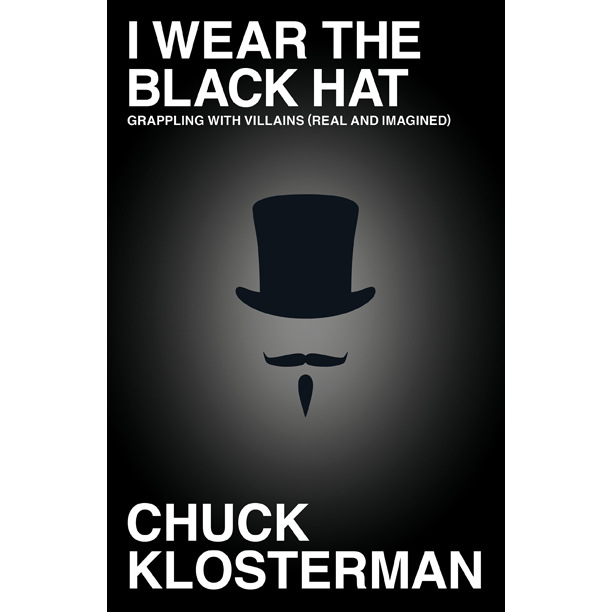
An excerpt from “I Wear the Black Hat: Grappling with Villains (Real or Imagined)” by Chuck Klosterman

I-Wear-the-Black-Hat-jacket_612x612

http://shelf-life.ew.com/2013/06/20/book-excerpt-chuck-klosterman/

The link above will direct you to a sample chapter from the upcoming Chuck Klosterman book “I Wear the Black Hat: Grappling with Villains (Real or Imagined).” (What?! You haven’t preordered it yet?) This chapter is about all the musicians Klosterman hated from 1984-2003 and how he came around on some of them … or just didn’t care anymore. Like most of Klosterman’s criticism, much of it is funny and provocative. However, a particular passage stands out:

“Somewhere in 2003, my ability to hate the Eagles (or Coldplay, or Dave Matthews, or Mumford and Sons, or whoever) just evaporated. I could no longer construct antipathy for random musicians, even if they deserved it. My personality had calcified and emancipated itself from taste. I still cared about music, but not enough to feel emotionally distraught over its nonmusical expansion into celebrity and society. And this was a real problem. Being emotionally fragile is an important part of being a successful critic; it’s an integral element to being engaged with mainstream art, assuming you aspire to write about it in public. If you hate everything, you’re a banal a–hole . . . but if you don’t hate anything, you’re boring. You’re useless. And you end up writing about why you can no longer generate fake feelings that other people digest as real.

There needs to be more awareness about the cultural impact of reverse engineering, particularly as it applies to fandom and revulsion. It’s the most important part of describing the day-to-day import of art, which is ultimately what criticism is supposed to do. But there are no critics who can admit to their own reverse engineering without seeming underinformed. It’s like arguing that the greatest Russian novel ever written happens to be the only one you ever finished.”

The link above takes you to the full chapter, as opposed to the small excerpt of the chapter that’s in the print edition of Entertainment Weekly this week. And if you like what you see, be sure to check out any of Klosterman’s non-fiction books, especially “Fargo Rock City” and “Sex, Drugs, and Cocoa Puffs.”

“Paris 1919” – John Cale

Video

This is the title track from John Cale’s elegant solo album, released in 1973. Backed by members of Little Feat, “Paris 1919” feels like an album for a lovely summer afternoon, light and airy and a big departure from his highly disturbing (but brilliant) next three albums he recorded for Island Records. One of the few musicians who can glide so seamlessly between the sacred and the profane and neither side seems out of place.

“Evangeline” – Matthew Sweet

Video

http://www.youtube.com/watch?v=Ovd-_33dSo4

From Sweet’s classic 1991 album “Girlfriend,” “Evangeline” is a terrific, crunchy, upbeat hard-rock love song. I’m not entirely sure who did the shredding guitar work on this song, but I believe it’s Sweet and Richard Lloyd (from the band Television). Sweet always had great taste in sidemen and production.

Arguably the best song ever written taking the perspective of a comic book character (Johnny Six from the 1980s comic “Evangeline”).

“Freddie’s Dead” – Fishbone

Video

http://www.youtube.com/watch?v=4zICxh9kKZg

A smokin’ punk-funk cover of Curtis Mayfield’s Superfly classic “Freddie’s Dead” by one of the most energetic bands of the late 1980s-early 1990s. One of the best concerts I ever experienced was seeing Fishbone in 1991. The sound was loud, the strobe lights were enough to send you into seizures, and the walls were sweating. From the 1988 album “Truth and Soul.”

“Midnight Radio” – from the 2001 movie “Hedwig and the Angry Inch” dir. John Cameron Mitchell

Video

http://www.youtube.com/watch?v=u8Y-sZ2WrfA

The incredibly moving final song from John Cameron Mitchell’s brilliant rock opera “Hedwig and the Angry Inch.” This is from the 2001 film adaptation. A great, great film and a much more transgressive and brilliant musical than Laz Buhrman’s “Moulin Rouge” released that same year. Don’t get me wrong. I actually admire “Moulin Rouge” a lot, but “Hedwig” kicks “Moulin Rouge”‘s ass.

Neil Patrick Harris recently announced he will be starring in a Broadway revival of “Hedwig and the Angry Inch.” It will be weird to see “Hedwig” removed from its punk rock roots, but I’m sending my best wishes that they can pull it off.

“Livin’ Thing” – Electric Light Orchestra

Video

My all-time favorite ELO song. Brilliantly used over the end credits of P.T. Anderson’s 1997 film “Boogie Nights.” The attached video is extremely primitive … kaleidoscope visuals plus a lead singer who barely tries to match his vocals to the original studio track … but extremely cool in my opinion.