Fats Domino does a killer version of this deep track off the Beatles’ “White Album.”

Back in the spring of 1980, my older brother and I saw this trailer (or some variation of it) while waiting for another movie. My brother looked at me, serious as a heart attack, and said “We have to see this movie.” Since my Dad (who was divorced from my Mom) was coming for his monthly visit the following weekend, we were going to do everything in our power to have him take us to see this R-rated film. To my Dad’s credit, he wanted to take us to see “The Black Stallion,” which, as far as G-rated films go, is pretty superlative. But my brother was beyond the age where G-rated films were remotely cool, and me, by extension as a spineless younger brother, agreed 100%. So after much cajoling, my Dad bought the tickets and we settled in for something that completely blew me away (and needless to say, was completely inappropriate for a 10-year old). Not only was “Mad Max” full of action, but a lot of people died … in very painfully graphic ways. I was seriously disturbed, but also completely thrilled. Of course, my brother and I completely ruined any future chance of seeing a transgressive movie like this by excitedly telling our Mom in graphic detail what we just saw. My Mom berated my Dad, who sheepishly shrugged his shoulders and tried to say, “I had no idea what kind of movie this was.” Wherever you are Dad (he’s since deceased), sorry for putting you in that position … but also thank you for taking my brother and me to such an awesome flick.
I tried explaining for months to my friends how great this film was, but since the original theatrical run of “Mad Max” was completely under the radar in the United States (one of the only territories in the world where this film wasn’t a success), most just brushed me off. It wasn’t until the 1982 sequel “The Road Warrior” made major waves that my friends got interested in seeing “Mad Max.” As terrific as “The Road Warrior” is, the original “Mad Max” is still the best. There’s just something so freakin’ cool with how down and dirty this flick is. The only film that has remotely approached its original feel in my opinion is Paul Verhoeven’s “Robocop.”
In my opinion, Bryan Ferry gets better as he gets older. The world-weary Serge Gainsbourg persona suits him pretty well and he really covers Dylan with class and taste, especially this rambunctious cover of “It’s All Over Now, Baby Blue.” I couldn’t find the terrific studio version from 2002’s “Frantic” on YouTube, so this decent live version will have to suffice.
An almost 17-minute live version of “Walk on the Wild Side” where Reed takes various breaks to talk about the genesis of this rock classic, along with other topics that are on his mind or get on his nerves (i.e. rock critics). A really funny and interesting analysis by an artist of his work.
One of the warmest and funniest documentaries I’ve ever seen is Ross McElwee’s “Sherman’s March.” McElwee, a North Carolina native, originally planned on making a documentary on General William Tecumseh Sherman’s march through Georgia and the Carolinas during the Civil War. However, right before filming, McElwee broke up with his girlfriend. Unable to focus on his original subject matter, he started documenting his attempts to find a new girlfriend, featuring various women he’s interested in, only to face disappointment most of the time.
Despite the subject matter, this is not a self-pity fest or a lecherous / misogynistic journey through multiple hook-ups. McElwee genuinely loves women, thinks the world of them, and the loving way he captures various women who strike his fancy is touching. That’s not to say that some of the women he encounters aren’t … well … a little “off,” as you can see in the clip above.
“Sherman’s March” is a long film (over 2.5 hours), but it’s not dull at all. It’s a real charmer. It has won numerous awards over the years, including being selected by the Library of Congress in 2000 for preservation in the National Film Registry. Their opinion was that it was a “hilarious one-of-a-kind romantic exploration of the South.” I couldn’t have said it any better myself.
And there was a happy ending for McElwee in real life. Not only did he get married and become a father (the subject of his documentary “Time Indefinite”), he’s also a film professor at Harvard as well as the creator of several other terrific documentaries.
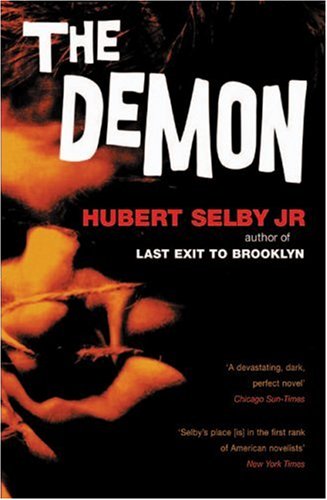
Sex addiction is sort of taken seriously these days, but too often, it’s either thought of as a failure of morality or mindlessly celebrated as “transgressive.” I don’t believe Hubert Selby Jr. was ever a sex addict, but sex addiction follows similar patterns of other addictive behaviors, whether it’s drug abuse, shopping to the point of bankruptcy, hoarding, overeating, etc. Addiction is a compulsion to do the same behavior over and over again to satisfy some undefined need that’s never fulfilled. It can be a very scary and dark place. Selby understood this and had the foresight to write one of the first pieces of fiction that took this compulsion very seriously.
Written in 1976, “The Demon” is about a man named Harry who is a rising star on the corporate ladder, except his addiction to anonymous hook-ups consistently threatens to derail his career, his marriage, his sanity, his freedom, and his life. The book chronicles roughly 15 years Harry’s life from his early 20s until his late 30s and shows his struggles. It’s an explicit book, but not in the way you would expect (especially from Selby). Instead of describing Harry’s sexual hook-ups explicitly, it instead graphically describes the inner demons raging within him before a hook-up … the twitching, the sweating, the rationalizing, and finally the surrender to his compulsions. He tries substituting other things for his addiction (i.e. he becomes obsessed with collecting plants), but always succumbs to the monkey on his back. The book takes some very dark turns. I can’t say there’s a happy ending.
If my synopsis makes “The Demon” sound like some hysterical, religious-inflected “Reefer Madness”-style look at sex addiction, it’s only because of my limitations as a writer. “The Demon” is a great, but very dark hell-ride into the inner hell of compulsive behavior. The fact that this was written during the height of the sexual revolution (the original book was published by Playboy Press) is especially ballsy on Selby’s part and being a recovering addict himself, had an insight into a compulsive behavior many didn’t (and still don’t) take seriously. A truly terrific, scary, and underrated book that many people don’t know about (“Last Exit to Brooklyn” and “Requiem for a Dream” being Selby’s most famous works).
I can’t tell if this is the most boneheaded example of corporate marketing ever or deadpan comedic genius on the level of Andy Kaufman. It’s likely the former, but if you were a comedian trying to design something that would make hipsters lose their collective minds, you couldn’t do any better than this TV ad. Even better than the infamous “Freedom Rock” commercials of the late 1980s.
American Me trailer:
Blood In, Blood Out trailer
Before we begin, I need to advise that there are major spoilers in the following essay. There’s no way to discuss these films in the way I want to discuss them without revealing key events in the films. If you’ve never seen either of these films before and don’t want spoilers, please don’t read this essay.
Much of this piece has been gleaned from reading the hard work of several reporters and writers over the past 20 years… None of this material is original on my part, nor do I claim any authorship … I’m just summarizing (at least to me) a very fascinating story and will give credit to others as much as possible with links to the original articles. If you are the author of one of these articles and don’t feel I properly credited you or got something wrong, please let me know and I will make the appropriate revisions posthaste.
Most importantly, please know that my intent is not to disrespect any person, living or dead, or any group. I’m just relaying what others have already written about in the most objective manner possible and giving my two-cents worth on the films. My opinion is strictly about the films, not about the people the films are allegedly about.
Disclaimers now out of the way, here we go …
The first part of this essay is gleaned from the article “The Mexican Mafia v. Hollywood” by Ari Bayme from www.mrmoviestimes.com as well as Guy Garcia’s April 1992 article “A Tale of Two Movies” from Premiere magazine…
During the 1970s, writer/director Floyd Mutrux (“Aloha Bobby and Rose,” “American Hot Wax,” “The Hollywood Knights”) wrote what many considered one of the best unproduced scripts at the time. The script, called “American Me,” was inspired by the true story about the creation of the Mexican Mafia. Mutrux based his script on the story of Rudolfo “Cheyenne” Cadena, a Latino prisoner who helped start the Mafia as a means to empower Latino prisoners. Cadena had educated himself behind bars and was trying to forge cultural unity. Cadena was later killed by a rival Latino gang when he was trying to wage a truce between the two groups. After his death, Cadena became a legend to the Latino prison community. Mutrux wrote “American Me” about Cadena’s transformation into a man trying to better his people.
Mutrux sold his script to Paramount in 1974 for $400,000 (one of the largest fees ever paid for a script at the time). It was widely hailed and at one stage, Al Pacino was attached to play the character based on Cadena (named Santana in the script) with Hal Ashby (“Harold and Maude,” “Shampoo,” “Being There”) directing and famed music/film impresario Lou Adler producing. Then, Pacino stalled and the project went into development hell. Subsequently, “American Me” was voted by American Film magazine as one of the test best scripts never made. Actor Edward James Olmos (whose acting debut was in Mutrux’s 1975 hit “Aloha Bobby and Rose”), along with filmmaker Robert M. Young (“Short Eyes,” “Dominick and Eugene”), expressed interest in the project and in 1982, asked Mutrux for the rights. As Mutrux advised ( from Guy Garcia’s article) “I had moved on to other things … I told Eddie, ‘Go ahead, I trust you.'” As the decade progressed, Olmos’s star rose, scoring pivotal roles in Ridley Scott’s “Blade Runner” and the TV series “Miami Vice” (for which Olmos won an Emmy) and scored an Oscar nomination in 1987 for Best Actor for his performance in “Stand and Deliver.” It all sounded like very good news indeed. That is, until Olmos started rewriting Mutrux’s script. But we’ll get back to that a little later …
Meanwhile, Jerry Gershwin, a producer at Orion Pictures, approached Mutrux about the rights to “American Me.” When Gershwin learned they weren’t available, per Mutrux (from Garcia’s article) “they went off and developed their own picture about gang life.” The script, written by Ross Thomas, became what would later become the film “Blood In, Blood Out.” As Mutrux said, “My story went from 1941 to 1972, and they’d picked it up and extended it into the ’80s.” Mutrux was then hired to do a rewrite. “When they came back to me and asked me to rewrite it, there were scenes in that script that came directly out of ‘American Me.’ They said ‘No, no, that was a real event,’ and I said, ‘No, it wasn’t. I wrote it, and I know it’s fiction.'” Mutrux’s original script had been split into two interrelated, but ultimately, separate scripts. Taylor Hackford, Oscar-nominated director for “Ray” and director of box-office hits “An Officer and a Gentleman” and “White Nights,” then got the rights to “Blood In, Blood Out” and offered Olmos the opportunity to direct and star in it, if Hackford could produce. Olmos advised he would only do it if Young was brought on as a creative consultant. Hackford refused, and Olmos turned down Hackford’s offer.
It was at this point, Olmos had some ideas in mind that differed from Mutrux’s original vision for “American Me.” Olmos saw “American Me” less a story about a man who transformed himself from criminal to cultural hero and more about “the cancer of the gangs and the drugs and violence” and “about the causes of the cancer.” As Olmos saw it, “I’m from the barrio, and although I’ve never been to jail, I’ve seen what goes down, and I wanted to show what happens when values, both positive and negative, are passed on from father to son, and then brother to brother by way of example.” Olmos continued, “The original script in 1974 made Santana a romantic hero, and I was afraid that it was such a cliche, that it’s what has been done time and time again to this genre … I could have done the same thing and portrayed Santana as this man who, if only he’d had a chance, could have really been someone, and justified his behavior, but I immediately dismissed that approach. I made this film for one purpose – to encourage people to start a dialogue over the subject matter, to look at it and make up their own minds. Not everyone’s going to like it, and not everyone’s going to hate it, but hopefully it’ll provoke discussion.” Pointedly, Olmos said, “I rewrote the script with Floyd and I take full responsibility for the intent and content of the movie.” (Interview with Olmos from Iain Blair’s March 8, 1992 Chicago Tribune article “Crime’s Roots”).
What was Mutrux’s take on Olmos’s interpretation? From Bayme’s article: “(My script) was a great story of a warrior and a visionary … I gave up one of my best pieces of work to someone who disprespected it.” To support his vision of “American Me” being about the “cancer of the gangs,” Olmos removed many of the qualities from the characters that made Mutrux want to write the script to begin with … dehumanizing the characters, instead of deglamorizing them, according to Mutrux. Olmos created scenes depicting Santana being raped at knifepoint in juvenile prison; Santana experiencing sexual dysfunction as an adult out of prison where, during the height of lovemaking with his girlfriend (the film alleges this is his first time with a woman) flips her over and tries a prison-style assault on her; and Santana finally dying at the hands of his fellow gang members who believe he has become too soft. As Mutrux fumed, “Not only is it not true but it is a horrible piece of fiction to put on the leader of the Mexican Mafia … (‘American Me’) was a love story. But Eddie f–ked me, he f–ked the Mafia, he f–ked the studio, and he f–ked himself.”
Meanwhile, Hackford moved forward with “Blood In, Blood Out,” taking over directing and producing duties. By this point, the project had moved to Disney’s Hollywood Studios and became Hollywood Studio’s first R-rated film. The final script was credited to Mutrux, Jeremy Iacone, and famous Lantio poet/writer Jimmy Santiago Baca, whom Hackford credited with contributing most of the final story. Despite some similarities to the orginal “American Me,” Hackford’s film became a different story altogether. “Blood In, Blood Out” starts in the early 1970s and ends in the mid-1980s (“American Me”‘s timeline is from the 1940s until the early 1970s). Hackford’s film follows three Latino cousins, Miklo, Paco, and Cruz and their divergent paths after a confrontation with a rival gang. Paco (played by Benjamin Bratt) joins the military as an alternative to prison and becomes a police officer / detective. Cruz (played by Jesse Borrego) becomes a talented artist whose career is sidelined by drug addiction. Miklo goes to prison and eventually becomes a leading member of the Mexican Mafia (called La Onda) through plot twists too complicated to mention here.
The chief similarity between “Blood In, Blood Out” and “American Me” was that both projects had a Cadena-like character, called Montana in “Blood In, Blood Out.” While “Blood In, Blood Out” has Montana die in the same controversial manner that Santana’s character in “American Me” died (a set-up by their own gang), Montana seems to be much closer to Mutrux’s original concept for the Cadena-like character. Montana’s character comes across very noble, mentors the lead character Miklo in his efforts to gain release, and is eventually trusted by prison officials to attempt to stop the violence in other prisons.
Both films went into production around the same time and immediately, battle lines were drawn between both productions. Rumors circulated that both productions accused the other of being disrespectful to Chicanos. Olmos said (from Garcia’s “Premiere” magazine article): “I told everybody who approached me about the situation, ‘Look at the intent of the projects, and then move forward with that knowledge.'” Scripts for both films were sent to the National Hispanic Media Association, whose chairperson Esther Renteria advised “Our official position is that we regret that these films are being made. I understand that the Italians went through this and that now it is allegedly our turn. I am not in favor of violent portrayals of any ethnic group. But I understand the financial workings of Hollywood and that these films will be made and that people will go see them.”
“American Me” was released March of 1992 by Universal Pictures. It received respectful, but not entirely enthusiastic reviews by the critics of the time. It eventually grossed around $13 million and based on its $18 million budget likely broke even once video revenue is taken into account. “Blood In, Blood Out” was not released until April 1993, due to Disney being squeamish about releasing a gang-related picture after the LA riots of 1992. When it was finally released, it had the less incendiary title “Bound by Honor,” but had the original title restored once it was released on video. The film received limited release, garnered a critical response more lukewarm than “American Me” and grossed less than $5 million, a pittance compared to its $35 million budget. However, it eventually found an audience on video and cable TV and has attained a cult following over the years.
While both films were fairly controversial productions, there was little fallout from the release of “Blood In, Blood Out” other than Disney barely releasing nearly a year after it was supposed to have come out. The fallout from “American Me” was far more significant. Particularly upsetting to many of Cadena’s colleagues was the scene showing Santana being raped in juvenile hall, an event the Mafia maintains never happened. As one former gang member advised in a 1993 LA Times article about the controversial scene, “If it had ever happened, he never would have become a Mexican Mafia member. And if he had become a Mexican Mafia member and they learned about it later, they would have killed him.” This seems consistent with a lot of what’s been said over the years about the victims of prison rape. Whether it’s known that a victim fought back or whether it was a “40 person vs. 1 person” scenario doesn’t matter. Once one is stigmatized as a victim of prison rape, that status stays with them their entire time in prison, regardless of whether they leave and come back to prison, or go to another prison. As such, it would be unheard of for someone with that status to become a successful gang leader in prison.
A technical advisor on “American Me,” as well as a consultant on Mutrux’s original script, former San Quentin associate warden Tony Casas, knew Cadena well and was surprised to see Olmos’s additions to the story. As Casas indicated in Katz’s article, “This guy was a criminal, no doubt about it, but he had a lot of class.” After seeing the final film, he asked Olmos “Why was that done? That would have never happened to a guy like this.” Olmos replied that it was done as a “philosophical” thing to show kids what could happen.
While the fictionalized events of “American Me” arguably lend a power to Olmos’s thesis about gang culture being a cancer, it also put his life in danger, as well as the lives of others who worked on the film, particularly ex-gang members. Three people affiliated with the making of “American Me” have been murdered since the movie was released, which many felt was a “message” to Olmos. While fictionalizing a true story can be artistically liberating for many works, it can turn into a dangerous game when the people being fictionalized feel like their honor has been compromised. As Katz observed, “‘American Me’ went a step further, tearing down the mythology of some of the state’s hardest-core inmates, most of them convicted killers, who exist in a degrading environment stripped of material pleasure. Respect, in their world, means survival. Poetic license is not appreciated.”
20 years later, how do both films stack up? I’m going to call it a draw. I believe “American Me” is the better film artistically. Its scope, as well as the quality of the acting and editing are quite impressive, especially when you consider Olmos was a first-time director when he made the film. Having said that though, “American Me” is unbearably grim, depressing, and unpleasant to watch. In addition to multiple prison rapes, people die in extremely disturbing and graphic ways. It’s not a film I can ever imagine anyone seeing more than once or twice. On the other hand, despite some grimness as well, “Blood In, Blood Out” is far more entertaining and definitely more watchable. The acting and musical score of Hackford’s film is a bit over-the-top. Also, Paco’s and Cruz’s stories receive short-shrift to Miklo’s story about his rise in the prison hierarchy and it would have been nice to see their character arcs fleshed out better (likely cut out due to the three hour length the film already hovered around). However, despite the fact that it’s over three hours long (in its director’s cut), “Blood In, Blood Out” feels like it’s half that length. It moves like a bullet and is always riveting. It’s a very, very good film, highly underrated, and is one of the better crime films released in the last 20 years.
Articles cited and referenced in this piece (and if you’re interested in learning more, please click on the links below):
Ari Bayme’s article “The Mexican Mafia vs. Hollywood”:
http://www.mrmovietimes.com/movie-news/the-mexican-mafia-vs-hollywood
Iain Blair’s article “Crime’s Roots,” The Chicago Tribune, March 8, 1992:
http://articles.chicagotribune.com/1992-03-08/entertainment/9201220212_1_gang-movie-zoot-suit-values
Jess Katz’s article from the LA Times, June 13, 1993:
http://www.sjsu.edu/faculty/hart/PDF%20upload/LA%20times%20American%20Me.doc
Alex Simon’s interview with Taylor Hackford, originally published in Venice Magazine December 2000/January 2001:
http://thehollywoodinterview.blogspot.com/2008/03/taylor-hackford-hollywood-interview.html
Guy Garcia, “A Tale of Two Movies,” Premiere Magazine, April 1992, p. 38-42. (no link available)
The bravura montage from one of Spike Lee’s best, and most underrated films “Summer of Sam.” This is the sequence where Adrien Brody’s character plays his guitar along to the Who’s “Baba O’Reilly” juxtaposed with clips of the craziness from his character’s neighborhood, along with the rest of NYC (including the Son of Sam murdering more people), during the summer of 1977. One of the best films of the 1990s and one that is sadly ignored / forgotten. Co-written by Michael Imperioli, Christopher Molisanti from “The Sopranos.” Due to graphic violence and language, not safe for work.
You will still see posts on Dave’s Strange World, but not as often, in the days ahead… I haven’t abandoned blogging by any means, but I’m working on longer pieces and these pieces need time to research and write. You will see the traditional shorter, pithier pieces I have traditionally posted, but not quite as often because I have other things in mind. If you’re a fan, I guarantee you won’t be disappointed … The first of these longer pieces should appear soon.
 Dave's Strange World